When many think of Goth music, they imagine kids dressed in black smoking cloves and swaying like brooms in dark smoky clubs. But, there is a deeper side to the macabre genre. In the tradition of Romantic poetry, the songs’ lyrics often express the dark side of the human experience, the side we often deny. It has been said that what you bring forth with save you, so shedding light on some of life’s darkest emotions provides a vital source of therapeutic disclosure, which is one of the higher purposes of art.
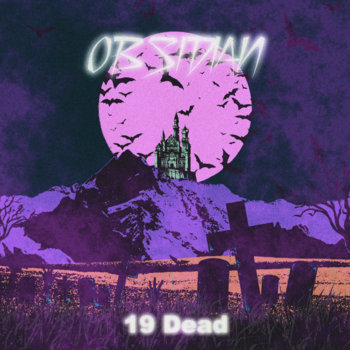
Obsidian – a Gothic/Post-Punk powerhouse hailing from the shadows of Wilton Manors, Florida -recently released their first full length album “19 Dead.” “19 Dead” refers to the 17 Parkland shooting victims, one which was a friend of Mortis, and two other friends he lost. The commemorative record weaves a delicate interplay between haunting, rhythmic sounds- typical of goth music- and captivating, poetic lyrics that scream of the ills of modern times. With electrifying synthesizers, the album infuses melodic dance beats featuring striking guitar solos and passionate vocals that navigate the realms of tradition and innovation. From themes like love lost, spirituality, and even climate change, pertinent to our city, the album presents dark, universal emotions while reflecting on societal issues.
As the sonic landscape unfolds, listeners are invited to delve into the shadows of the human experience, highlighted with a South Floridian flair. “19 Dead” emerges from the depths of its grave as a sonic exploration that resonates with the complexities of the present, interweaving the haunting echoes of the past.
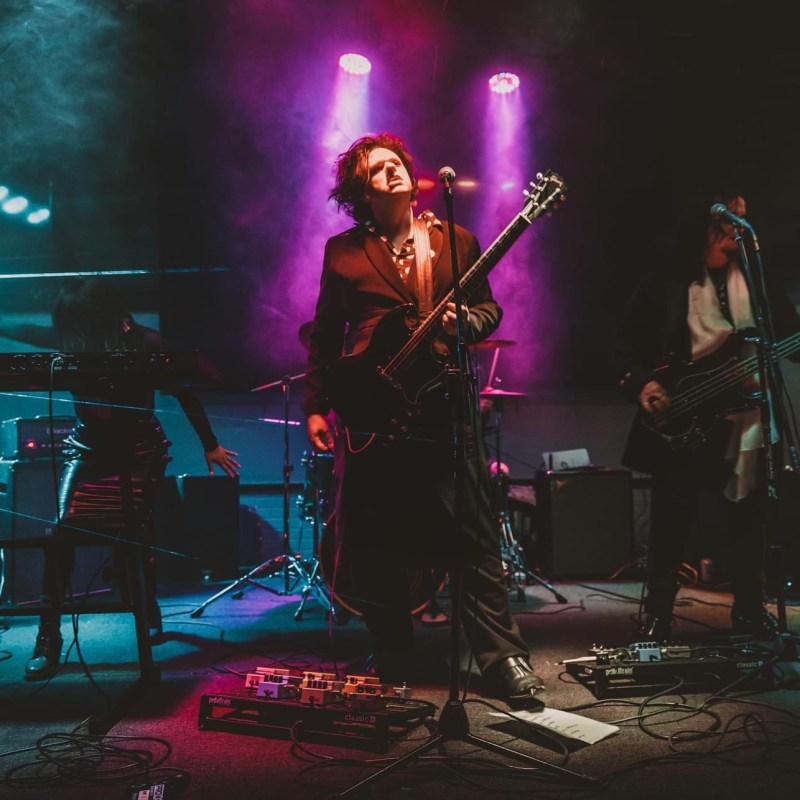
We had the great opportunity to interview the enigmatic Missy Mortis, the lead singer, primary songwriter, and guitarist of the band. Born in 2018 as a creative sanctuary for its members to confront their own traumas and existential revelations, Obsidian has evolved into a four-piece sonic force. Comprising Missy Mortis on Guitars and Vocals, Dent A Gon on Bass Guitars, DC on Drums and Percussion, and Kathy D on Synths and Keyboards, the group blends a fervent love for rock music with darker electronic and esoteric undertones.

Venturing into the haunting realms of “19 Dead,” an album that delves into the spectrum of dark emotions and existential themes, Missy Mortis invites us to explore the intricate tapestry of Obsidian’s sound, the evolution of their craft, and the profound messages they hope to convey to listeners. Join us in this intriguing conversation with Missy Mortis, as he shares his musings on goth music, the band’s aspirations, and the transformative power of self-expression through the shadows of sound.
In this interview, he delves into the depths of Obsidian’s musical journey, exploring the band’s evolution, the inspiration behind their latest release, and the profound impact of gothic music on his life. From commemorating lost loved ones to navigating the diverse influences that shape their sound, Missy Mortis provides insights into the cathartic process of songwriting and the collaborative synergy within the band.
Miami Chronicles (MC): What does goth music mean to you?
Missy Mortis (MM): Gothic music to me is a musical genre that stemmed from punk rock that focused more on the darker expression of art. I find it to still be counterculture, yet romantic and morbid in its artistic presentation.
MC: Can you share the inspiration behind the title “19 Dead” for your upcoming album, and how does it relate to the band’s overall theme or message?
MM: 19 Dead has now officially been released on Bat-Cave Productions; It is a memorial to some people we have lost close to us since our founding in 2018. 17 of the Parkland victims, one of whom I knew along with the total of 15 I partook in care of when I used to work in the mortuary field. Another was a close friend of mine who died Halloween night in Miami, and the last was our late merch person.
MC: Kind of like the Romantic poets who explored a positive, therapeutic element through the often dark genre that dealt with their own tragedies. Do you find a quality reflective of the human condition in goth music ?
MM: I do feel that way. I find it very therapeutic to reflect and commemorate. I feel that all musical genres offer an artistic and ritualistic aspect of our humanity. Goth music I feel has saved my life as well as others along with the rest of the community found in the subculture sharing in a darker form of artistic expression.
MC: As the primary songwriter, how have you channeled your own traumatic experiences and existential epiphanies into your music, and how has this evolved throughout Obsidian’s journey?
MM: My entire life has honestly been a mess that I have been trying to make sense of. Music, I feel, has been my only true way to express myself. I honestly don’t know what parts are being neuro-divergent and which parts are emotional trauma. Regardless, I find it to be the only way I can truly express myself in point and time. I feel it has honestly been time and experience that have contributed to the growth of the band in terms of songwriting.
MC: Obsidian’s style is often described as a blend of “post-punk,” “goth,” and “death rock.” How do you navigate combining these diverse influences to create a cohesive sound that represents the band’s identity?
MM: I just want to create the music I like. I feel I create art as a form of catharsis for me. If they like it, great! If not, well I guess it wasn’t meant for them and hopefully one day we can share an artistic moment in the future.
MC: “A Swamp,” “Living Dead,” and “Vultures” were your previous EP releases. How has the band’s sound evolved from these EPs to the upcoming full-length album “19 Dead,” and what can fans expect in terms of musical progression?
MM: I honestly hoped to focus on production more this time around. Coming from more DIY releases to hopefully a more professional-sounding work. I love great records and hope we managed to accomplish that, as to our more rushed weekend session recordings of our previous EPs.
MC: Could you discuss the collaborative process within the band when crafting new songs, and how each member’s unique contribution shapes the final product?
MM: Really, I feel that everyone adds their feel to developing a song. I just know my role is to curate and guide what I have felt at a point in time. Everyone else in the band does contribute in a way to the development of our art.
MC: Obsidian draws inspiration from both traditional goth acts like Siouxsie and The Banshees and modern acts like She Past Away. How do you balance honoring the roots of goth music while bringing a contemporary edge to your sound?
MM: Honestly, I just want to say Rock N, Roll. I love the old stuff and the new stuff coming out, but at the end of the day, we make what we like even if it may clash sonically.
MC: As a goth band from Miami, how does the local music scene influence your music, and do you find it challenging to stand out in a city known for its diverse musical landscape?
MM: I honestly don’t know how to answer that. There are a lot of great bands in Miami. Yet, I find myself hating South Florida to an extent. However, I can’t deny the live music scene hasn’t helped shape me and continues to do so.
MC: Well our city definitely has its challenges, but you have many fans here. With the release of “19 Dead” in 2023, are there specific themes or messages you hope they will take away from the album?
MM: Please advise self-care and mental health. Please, don’t let me or others write songs with a similar inspiration. Even though you may feel alone at times, and the world may feel like it’s out to get you, you are not alone and you are loved.
MC: That’s a beautiful message. Looking ahead, what are Obsidian’s aspirations and goals for the future, both in terms of musical exploration and broader impact on the gothic and post-punk music scene?
MM: At this point, I just want to travel the world and share my emotions with people. We start work on our next full-length record in a few months from now. We hope more people will enjoy us as artists and as a band.
In the spirit of Romantic poetry, which imbues elements of the macabre, the songs’ lyrics explore dark emotions such as grief, sadness, loneliness and melancholy. The song “Neon Lover,” for instance, is an ode to lost love, resonating with the pain of separation and the survival of love beyond physical existence. The lyrics “We survived” is the last thing you said / The night dispersed as the cigarette burned / Forever that memory is burning my mind / Forever burning in your neon glow,” unfold as a melancholic narrative capturing the enduring impact of a significant moment in time. The night dispersing with the burning cigarette reinforces the transient nature of life and the enjoyment of elusive vices.
“Glass” delves into the depths of suffering, evoking the fragility of the human spirit amidst life’s trials. The haunting track presents a visceral exploration of pain, isolation, and the howls of trauma. The lyrics paint a vivid picture of emotional turmoil, capturing the essence of an individual grappling with profound internal struggles, such as suicidal ideation. The repetition of the lines “Pain. Piercing through” cuts through the consciousness of listeners, evoking a permeating sense of distress. With the lyrics “Igneous glass is all I could find / The closest thing to me that could end my life,” the artist expresses suicidal ideation. The “igneous glass,” represents illusions shattered along with an object capable of causing injury, a sharp symbol for the disturbing feelings expressed. Interestingly, the phrase is also a reference to the name of the band. Obsidian is a common type of igneous glass, and the band actually saved the musician’s life, as he tells us in the interview below.
“Angel” is a track that reflects the interplay between light and darkness. It’s a contemplation on spirituality, with references to angels, demons, and Jesus, exploring the eternal struggle between good and evil. It adds a layer of mysticism to the album, inviting listeners to contemplate the spiritual dimensions of our human experiences. It unfolds as a complex and evocative journey, blending themes of love, betrayal, empowerment, and the transcendence of societal norms. The words “Ascension. Ascension. Ascension / Power and Grace,” express a sense of redemption in the face of sin. The singer proclaims: “I have ascended to seraphim / Pain with pleasure submit to sin.” With songs like “Angel” Obsidian weaves a sonic tapestry that challenges expectations, inviting listeners into a world of mystery, power, and spirituality.
“Apathies of a Sinking City” is a reflection on the environmental challenges our world is facing. It’s a call to action, urging listeners to confront the apathy surrounding climate change. The song depicts a city sinking under the weight of indifference, serving as a poignant reminder of our collective responsibility to protect the planet. Through this song, the band uses music as a platform to address issues that resonate deeply with locals. The song is a haunting composition that paints an atmospheric picture of a city on the verge of submersion.
The song opens with a foreboding stanza: “The azure sky a sinking city / Vibrant life awaits cataclysm / Calm will break a storm is coming / This calm will break a storm is coming.” Sinking city is a name given to Miami because of the threat of sea-level rise. The city is vibrant with life but awaits an impending doom. The calmness in the beginning is a deceptive prelude to an oncoming storm, creating an eerie atmosphere that permeates the entire composition.
Sirens, both literal and symbolic, sing the nightlife as the rain washes out their light. “The sirens sing the nightlife / The rain washes out the siren’s light / Will we see the storm that’s coming? /Will we feel the ocean hunting?,” sings the artist. The lyrics depict an otherworldly creature warning inhabitants of Mother Earth’s wrath while they adamantly continue blind to her screams. They pose questions about whether the inhabitants will perceive the approaching storm and feel the imminent threat of the encroaching ocean. This blend of natural and man-made elements builds a sense of impending catastrophe.
As the sky above begins to break, the city below celebrates, engaging in intoxicated orgies throughout the storm. The lyrics provide a contrasting image of festive days and a seemingly bright future with the howling winds that pierce through the night. The city, known for its darker elements such as cocaine and porn, is caught in the tumultuous embrace of the storm. The sky above begins to break / The city below celebrates / Intoxicated orgies throughout the storm / The city known for cocaine and porn,” goes the song.
Each theme in “19 Dead” adds a layer to the overall emotional poignancy of the album. From personal struggles to societal challenges, the themes resonate with the human experience on multiple levels. By exploring these topics, Obsidian hopes to connect with listeners on a visceral level, providing a cathartic experience that goes beyond mere entertainment. “19 Dead” is a sonic journey through the shadows of human emotion and societal reflection. The album is adorned with eloquent poetry that vividly captures the havoc wrought by the darker facets of mankind, clandestinely concealed beneath our very noses.
Described as “post-punk,” “goth,” and “death rock,” Obsidian’s sound sprung from traditional goth acts like Siouxsie and The Banshees to contemporary forces such as She Past Away, and even the genre-defying funk and pop of Prince. With three EP releases – “A Swamp” (2018), “Living Dead” (2019), and “Vultures” (2020) – paving the way, Obsidian unveiled their first full-length album, “19 Dead,” early this year under Bat-Cave Productions, now available on all major streaming platforms.
 Miami Chronicles